A Kiwi couple's cruising adventures on America's Great Loop and around the coast of New Zealand

Tuesday, 16 August 2011

Plans and Custard


“The best laid plans of mice and men gang aft aglay”. The much mis-quoted line from Robbie Burns’ old Scottish poem, “Tae a moose” (To a mouse), which loosely translated means: “no matter how good your plan, it’ll often turn to custard!”

First the plan of sending the dinghy and 5HP Mercury outboard over to the USA as suggested in my last posting. I checked with US Customs and found no issues with the dinghy, just a 2.4% import duty to pay and a requirement to prove ownership. DO YOU THINK I CAN FIND THE ORIGINAL INVOICE!! I found the credit card receipt, an invoice for re-tubing my old dinghy which was done at the same time…but no document that said I own the new dinghy. I rang the manufacturer who told me that they had bought the Company just after I bought my dinghy and they would have to go through the old paper records to find an invoice. They sounded quite reluctant to do this, but a week later (bless their little cotton socks) they faxed me a copy of the errant document.

The outboard has a 1% duty and is required to meet US EPA emission standards. No probs – the manual that came with it says it does. It also says that the motor has a decal on it saying so. Nope….no decal. Also the manual was written in 2006 and it appears that in 2010 the EPA rules hardened up and, of course, my motor was manufactured in 2010. I have emailed Mercury in Australia and the USA and even sent the US a fax asking clarification but, surprise surprise, no answer from either. Probably not high on their priority list. It looks like the motor will have to stay here….I was wondering why there were no new 2 stroke outboards being sold in the USA – I suspect this is the reason. Still, an AGLCA member has advertised that he has a 4HP Mercury for sale and I may be able to catch up with him on my boat buying trip in September and buy it off him – so at least we’ll own a motor in the USA, if not a boat! – although what we will do with it until we arrive is another matter.

And speaking of the boat buying plan: In making the appointments with the brokers to see all of these prospective Loop boats, we eventually came to the conclusion that there were too many boats over too long a distance, and too little time. Since we don’t want to reduce the number of boats to look at, and can’t do anything about the distance, we had to increase the time. As all the flights were already booked for both of us, and rental cars and hotels also, we couldn’t add on to the end, so instead have brought forward my departure by 5 days. This brought additional airfare costs and cancellation costs for a hotel in LA, but gives me more breathing space for the boat viewing, particularly around Chicago. (although I am now going to be there over a holiday weekend – so I hope the boats will be available!) There is also a Looper get together in Chicago on that weekend, so I am going to attend that and I am hopeful of catching up with the AGLCA member with the outboard – so some dark clouds have silver linings.

On the subject of clouds – it snowed in Auckland yesterday. The first time in 70 years and the coldest day ever recorded here. So much for Global Warming!

Monday, 1 August 2011

Boat Buying

A couple of weeks ago I “hit the wall” regarding the Loop planning and it all started to get a bit daunting again. There is a lot to buying a boat anywhere and the plan to “go over and buy one next June” suddenly began to develop a lot of flaws. Firstly, there are just so many of them and they are so spread around except for the ones we thought we really wanted, like the Meridian 459 and Carver 444 of which there are very few and they are spread even further around. Then I came to the realisation that, in planning for the Loop, you have to have a starting point and a starting date – neither of which are possible until we have a boat ready and waiting. Finally (and I should have thought of this earlier) everyone in the Great Lakes region puts their boat away in a heated shed or wrapped up on the hard over winter because it freezes up there and they don’t go back into the water until after May. If we want to leave Chicago in August, and have a month or so to shake down the boat before we leave, that only gives us a month to find, and buy a suitable boat – and that just ain’t enough time!

So, it was time to revisit the whole boat buying plan and we began by widening the criteria for suitable boats. We wanted a cockpit, but there are only the 2 mentioned above that have them with the layout we want. Do away with the cockpit requirement and suddenly you have 14 to chose from. These are: 

Meridian 459 (cockpit) or 408
Carver 444CPMY (cockpit) or 396
Carver 456 and 466
Cruisers 4450/455, or 405/415
Silverton 43 and 453
Sea Ray 420AC
Maxum 41SCA.

The next thing was to look at the territory we had been searching. Canada, the NY river system, and the lower Mississippi became just too hard to manage, so we restricted it to just the Great Lakes and upper Mississippi and Tennessee/Ohio river areas. This brought up around 40 boats on our shopping list in an area that would require around 2000 miles of travel to see them all. We then started contacting the various brokers to ensure that the boats were still available (the vast majority were!) before making plans to travel to the USA and look at them before they all get shut away for the winter.

The upshot of all this is that I will leave NZ on the 4th September and fly to Minneapolis where I have some business to do (and there are a couple of boats to look at!) and then to Chicago. There I will pick up a rental car and drive down to Pickwick Lakes, Chattanooga, Nashville, Louisville, Cincinnati, up to lake Eerie, Detroit and around Michigan before returning to Chicago. Below is a map of the area with driving distances (in miles) and where the various boats are. At this time I have 37 boats to look at in 8 days – although some of them may be dismissed beforehand once I see what the models are actually like. Carolyn will fly across to Chicago on the 16th, by which time I will have a short list of suitable boats for her to look at. We then have another 7 days to decide which ones we would consider making an offer on before we fly out on 23rd.

Once a purchase is finalised the boat can be stored away for the winter (although it probably already will be) and we will have a starting point and time to aim for. We will also know what is needed to provision her and, if necessary, can send a shipment of stuff from NZ rather than buying it all over there. eg only one of the boats on our shopping list has a dinghy, so I could ship my (deflated) RIB and brand new 5HP Mercury outboard over, rather than sell them here. We could then put a lot of other stuff in the crate to make it worthwhile. We can also get the New Zealand registration carried out while we are still here, which will be a lot easier than trying to do it by “remote control” from the USA.

Monday, 11 July 2011

Regulations, regulations, regulations


Go to the USA, buy a boat, cruise the Great Loop, then bring the boat home or leave it there for future visits. Simple huh! …..Yeah, right!!!

Going to the USA

New Zealand is one of the countries (and there are quite a few of them) where its nationals can visit the USA under the Visa Waiver Scheme (VWS). However, such visits are limited to 90 days duration and you cannot apply for any extension of stay if you have entered under the scheme. Furthermore (and this has caught a few of my countrymen and women out), the scheme ONLY applies to travel into the USA by commercial airline and or ship. You cannot use it if you arrive by any other means such as car, bus, private plane or BOAT (take note Loopers)!! Friends of ours flew to the US from NZ,  entering at Los Angeles under the VWS,  then flew to Alaska to join a cruise down the inside passage. They got off the ship in Vancouver and caught a bus to Seattle, Washington but were stopped at the border as they did not have Visas, and the VWS did not apply. They got in in the end, but after considerable delay and inconvenience.

Therefore, to stay any longer than 90 days, you have to have a Visa. While this is not too difficult to get in NZ provided you have a valid reason (such as cruising the Great Loop), it takes time and costs money. However, it is also important to know that having a Visa does not give you automatic right of entry to the USA, and that the decision to let you in, and for how long (usually 6 or 12 months), is made by the Customs and Border Protection (CBP) officer at the point of entry. The CBP has a stated policy (check it out on their website) that all incoming visitors are considered as if they are intending to immigrate to the USA, and the burden of proof is with the visitor to demonstrate otherwise. So, no matter how tired or stressed out you are after  12 hours of flying to the USA, treat the man who looks at your passport at the airport counter with politeness and courtesy, as he gets to say whether you come into the country or catch the next plane out!

Then there’s buying a boat…….

There are lots of them there and some really good ones, but unlike here in NZ, even used boats incur a Sales Tax. There is no Federal Tax, each state (other than a few) has its own which applies when the boat is sold and registered. It would appear that one way of getting round the tax is to register the boat (or plane or car or truck) in a state that has little or no sales tax. Great idea!!! I bet no-one else thought of that!  Wrong,,,,,,,if you linger too long in another state that has the tax, you will be hit with a “user tax” that usually  happens to be the same as the original sales tax. So they’re not seen as being harsh, you will get a refund of the amount of tax you paid in your “home” state which of course is zilch if you didn’t pay any in the first place. If you find a state that has low sales tax and no user tax (like South Carolina), try leaving your boat there. Nope…. there you will get hit with a Property Tax. You could try outrunning them by not lingering, but you’ll always be looking over your shoulder for the IRS man with the clip-board, and I hear they don’t take prisoners. And by the way, dinghies have to have separate registration (and tax) to the mother vessel, as well!

So how about having the boat registered in your home country and cruising the USA under a foreign flag? Sounds simple enough and this question was posed to the AGLCA discussion forum a couple of months ago, so I watched and participated in the hope that it would solve the tax/registration problem for us. The response by the good hearted members of AGLCA was as contradictory and confusing as an earlier discussion on “the best way to legitimately avoid sales tax on a boat” had been. Just as confusing was the Department of Homeland Security (DHS) website which seemed to indicate that you needed either an annual “user decal”, which cost $27.50 and you applied for on-line, or a “cruising permit” which you got at your first point of entry into the USA.
To end the confusion I emailed the DHS and got the response that, in fact, you had to have both. The decal is valid for a calendar year from 1 January to 31 December and once you have set up an on-line account you can get it renewed annually. They will send it to a US or overseas address. 
The cruising permit is issued by the CBP (who are part of the DHS) at your first port of call in the USA and is valid for 1 year. However non residents cannot get a new permit unless the vessel has been out of US waters to another country for at least 15 days and you have the documentation to prove it. There is also a requirement that you have to report to a CBP officer at every port of call within the USA and have the necessary proof of doing so (such as a log book entry with the officers name etc)
Several AGLCA members suggested I buy a book “Smuggling your Boat out of Jail”, which I did. The only actual advice it gave was don’t get your boat into jail in the first place, but it was full of useful reference material. The result is that I will register the boat as a New Zealand ship and sail under the NZ flag, despite all the rigmarole over decals, permits etc. To do this requires a few hundred dollars and a bit of paperwork which all must be done in NZ and, of course, a boat.
Watch this space…

If you want to cruise in Canada for more than 45 days, you need to have a document that proves competency to skipper a vessel. As you don’t need anything like that here, all I have is 35 years of boating experience, so I sat a NASBLA approved on-line boating course through BoatUS and passed with 89% score (80% was required) and I now have a certificate to prove I’m competent.
You also have to have a Restricted Radio Operators Licence in Canada and fortunately I have one of those issued by the New Zealand Post Office dated 2nd February 1979.

An interesting thing about getting the NASBLA certificate was that, although I registered with my NZ address, it was necessary to fill the box that denoted which US state I lived in to accept my registration for the course. So now the Certificate says that it is for the “State Test: Illinois” and that I live in Hobsonville, Auckland. Illinois.

One of the frustrations about the planning so far is not having a US address and as we will be cruising around the USA on the boat, we never will. I’m told to expect to have problems with all sorts of thing like insurances, cellphones, internet accounts etc, where everything seems to revolve around “zip codes”.

Oh well, life was not meant to be easy.


Friday, 27 May 2011

Navigating the USA

I always knew it was a different system of buoyaging in the USA, and I used to find it disconcerting when we sailed out of (or into) US ports during cruises that the buoys were on the “wrong side” of the ship. Over there the rule is “red, right, returning” (to the harbour), whereas here it is “there is no red port left in the bottle”, or (how I remember it) “we are right out of red port”. Then, passing through the Panama Canal, I couldn’t figure out the buoyaging at all! I won’t go into detail – you can look it up yourself – but, suffice to say that the Americas, Japan, Korea and the Philippines operate a different (and opposite) system to the rest of the world. So to do the Loop, we have to unlearn all our local knowledge and adapt to the US system.

If only it was that easy -  because, as it turns out, there is another system operating for the Intra Costal Waterway (ICW) and yet another for the Western inland waterways (Lakes and rivers).

In a previous posting, I mentioned a Kiwi who had done the Loop and brought his boat back home. Well, we managed to track him down (I will refer to him as Capt Pete) and we have had several visits and chances to admire his Meridian 459 (which is why we are keen on getting one). One of the things he warned us of was the lack of reference in many of the Waterway Guides and books about the Loop to the variances in the buoyaging systems, particularly when the ICW crosses conventional shipping channels. I have obtained the recommended guides from the USA and I must admit that, while there is some info about buoyaging in them, they do not really explain well the relationship between the systems. Capt Pete said he ran aground 4 times because of this confusion, until someone gave him the little gizmo in the pic below, after which he never grounded again.


This gizmo sticks to the helm dashboard, and when you go through the first set of buoys in a new system, you set the red and green caps to match the buoys and then use it for the rest of that waterway to tell you which side of the markers you should pass. Simple, huh! If anyone knows where I can get one from, please let me know (otherwise I will make one before we go).

I also found a US Coast Guard website that had a very good powerpoint presentation on it about buoyaging in all these areas. Some parts were still a little unclear so I have doctored it so I can understand it better based on information on other sites on the net. I don’t know how to put a powerpoint presentation on this blog, but can email it to anyone who wants it if they let me know. 


There is also a system of sound signals on the rivers that you need to know and adhere to because of the large amount and size of commercial barges using them. They consist of whistle or horn signals, or are spoken over the VHF radio with the number of the blasts or whistles being the side on which you should pass etc. ie 1 = port, 2 = stbd, or when all else fails 3 = going astern. It has been suggested that we have a label at the helm to remind us what these signals mean as getting it wrong could be disastrous. See more on: http://wiki.answers.com/Q/What_does_2_blasts_of_a_horn_on_a_boat_mean#ixzz1M087spmh

You can also get this information if you do a Safe Boating Course with someone like BoatUS. You can do this online for free at www.boatus.org/onlinecourse and at the end (providing you pass the final exam) you get a Certificate that says it is recognised by the US Coast Guard and should be enough to satisfy the Canadian requirements for proof of competence...... which is necessary if you wish to stay in Canada for more that 45 consecutive days. Just take note that when you enrole, although it will accept an overseas address, you have to declare that you live in one of the US States as the Certificate relates back to that State and some of the course content and exam questions reflect that States laws. I chose Illinois (and the Certificate I got says that I reside in Auckland, IL)......... but any State will do.


We should have some interesting moments on this voyage.


Sunday, 15 May 2011

W.O.W (What of Woody)?

So, “what about Woody then” I hear some more of you say. “Are you going to take him with you?”.

At first we thought that this was the thing to do. We checked out the rules to take him into USA and found that it was pretty easy as New Zealand is considered a Rabies-free country. However bringing him home is an entirely different story. He would have to be checked and certified by a Vet before departure as being free from Rabies and other exotic dog diseases, then he would have to be transported in a brand new purpose built cage which does not allow anyone to come in contact with him and from which he cannot be released until arrival. On arrival he must be re-inspected by a Vet before entry to NZ is allowed and then he would be quarantined for 30 days, which could be extended to 180 days if MAF sees fit. If there is any concern over his health or even if the required paperwork is not in order, MAF have the right to destroy him without consultation.

Then there is the travel itself. Woody would not like being cooped up for upwards of 24 hours will travelling alone in the strange environment of an airplane hold. And, although he loves boating with us (except when it's very rough), we would not like to think of him becoming alligator tucker, or being bitten by a snake, while having his morning ablutions on the landing board.

Looking at the list of “fors” and “againsts”, the againsts far outweighed the only “for” which was to have our good mate and faithful companion with us, which would be pretty selfish.

So "what of Woody"? He’s going to stay with Aunty Lyn on the family farm at Wharehine on the Kaipara Harbour. She looked after him when we went on a North Pacific cruise last year and he had a ball. There are lots of animals to play with and plenty of relo’s with kids to keep him company. Last time he became great mates with a family of piglets who were all about his size.


There are some other people who have offered to look after him as well, and Lyn can use them if she wants to go away for a while, particularly when she and her friend Lois come to the USA to do part of the Loop with us. They’re considering the New York Canal segment which we should be doing around June-July 2013.

Just a bit about Woody now: He is a Swedish Vallhund (Val for short), and will be 3 years old in August. His full name is Vallarity Norwegian Wood and was one of a litter of 9 to Vallarity Kennels in Tirau NZ. Vals are an ancient Viking breed – go to www.svclub.org.nz to read more about them – and are very much the “pocket sized wolf” that they look like. Very intelligent, obedient and loyal.

                                                                8 weeks old
Woody's first dinghy ride


Puppy Woody with Aunty Lyn,  Lois and Mummy 


We’re going to miss him to bits while we are away, but he is better off with Aunty Lyn than being put through the stress of travel and the risks involved in taking him with us and bringing him home again.


Friday, 13 May 2011

The Great Plan

The timing to do the Loop is quite specific. If you look at the map on the previous post, you do the green bits in the spring, the orange bits in the summer and the purple bits during autumn (fall) and winter. Constraints are: the Great Lakes freeze in winter and thaw in spring which floods the rivers so you don’t want to be up there either of those times. The Hurricane season is from July to December 1st so you don’t want to be in the Gulf of Mexico or Florida then. The time you start is generally governed by where you start from, but because of these constraints, Loopers are usually travelling “loosely together”, so they apparently tend to meet up a lot.

Therefore our plan is as follows:

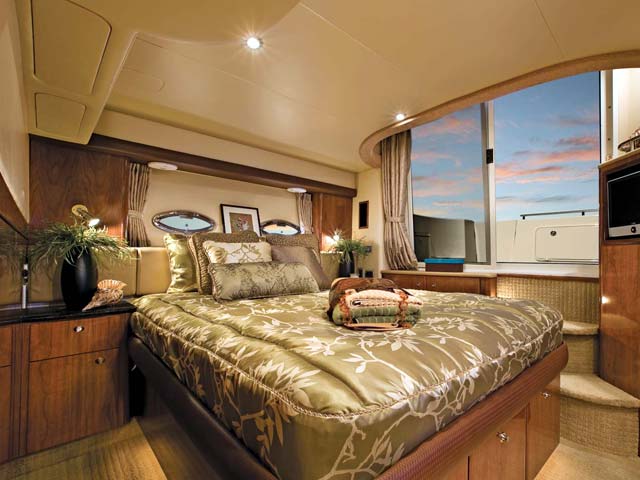
Next year, around June(ish), we will buy a boat somewhere around the Great Lakes area, which will probably mean a special trip to the USA and back specifically for the purpose. I favour buying in the Lakes area is because I would prefer a freshwater use boat and that is also where you start the Loop at that time of year. The boat we are looking for will be twin cabin with ensuite in each, separated by the saloon (salon in the USA). It will have twin engines for redundancy, preferably Cummins (despite what has happened with Kindred Spirit’s Cummins VT555 I still like the Cummins B series) and a layout that has stairs, not ladders as the first mate isn’t keen on them any more. And I have been instructed that she wants something newer and a "bit posh". We are presently looking at Meridian 459’s (surprise, surprise) and Carver 444CMY’s that fit the bill. If you want, check them out on www.yachtworld.com, but this what a Meridian 459 looks like and the Carver 444 is remarkably similar: 


And inside

Layout:


 VIP (guest) stateroom:

Master stateroom: 

Salon entertainment centre: 

Saloon: 

Galley:

Yes, even a washing machine/dryer: 


Sundeck and Wet Bar: 

Sundeck seating


Engine room: 


Doesn’t that all sound sooooo easy ……… It isn’t!!!!

We would then go over again to pick up the boat and have a couple of weeks shakedown cruising to get used to her and provision her up for the trip. We plan to leave Chicago in August, heading down the Illinois river to St Louis before joining the Ohio and Cumberland rivers and into the Tenn-Tom (Tennessee/Tombigbee) Waterway to Mobile, Alabama. Remember we are not supposed to get to the Gulf of Mexico before 1st December as it is the Hurricane season and you can’t get insurance. We will then cruise the ICW to Florida and cross the Gulf (the only stretch of unenclosed water) to Tarpon Springs (180-odd miles) then down the Florida Coast to the Okeechobee Waterway which crosses Florida about two thirds of the way down. We will then put the boat on the hard at a place called Indiantown and fly home for Christmas. This will give us an idea of whether we like the boat and the lifestyle.

Assuming we do, we will return to Florida in March 2013 and resume our adventure, cruising the ICW up the coasts of Florida, Georgia, South and North Carolina, Virginia, across the Chesapeake to Maryland and New Jersey and into New York. Then up the Hudson and into the Eerie Canal system to Oswego on Lake Ontario. Across into Canada, then up the St Lawrence seaway to Montreal and back down to Lake Ontario via Ottawa and the Rideau Canal system. We originally planned to go from New York straight up to Montreal via the Champlain and Richelieu Canal system, but if we buy a Meridian or Carver, we will be too tall to go under one of the bridges, so we have to go the long way round.
From there we cross through to Georgian Bay, via the Trent-Severn Canal system, up Lake Huron to the North Channel and back into the USA via Lake Michigan down to Chicago. And here we will have completed the Loop, or “crossed our wake” as Loopers put it.
But that’s not all, because then we will go back down the river system to Mobile again (we were going to go down the Mississippi to New Orleans the second time, but everyone says that it is not a good idea – no fuel stops apparently). Then round Florida’s “Panhandle” to Carabelle and via “the big bend” across the Gulf of Mexico (only 60 miles of open water this way) and right down the Gulf coast of Florida to the Keys. Finally up the Atlantic coast of Florida to somewhere where we either sell the boat, ship it home, or leave it there for future visits. By this time it will be March 2014 and time to go home.


So, there you have it.


So, what about this Great Loop, then?

Since we are now telling friends and family about this blog site, we had better start posting what we’re up to.

So, how did this Great Loop thing all come about? As I think I have said before, we have travelled extensively through the USA over the past 30 years for both business and holiday and from way back intended that, when we retired, we would buy a recreational vehicle (RV to Americans, campervan to kiwis) to travel around the USA for months at a time. We had tried an RV during a visit in 1987 and found it an expensive way to travel for short durations (we only had it for a week), but could see it would make sense to have one for an extended holiday. After that we used to just rent a car and drive around the States finding motels and hotels as we went along, usually using the vouchers in the “Travellers discount guide books” that we would pick up on arrival in each state.

In November 2000 we were booked on an Eastern Caribbean cruise out of Ft Lauderdale in Florida. We had flown into Orlando and hired a car to visit Cape Canaveral and Kennedy Space Centre (although we had been there 2 years before) and then drive down to the Florida Keys, before returning to Ft Lauderdale to catch the cruise. After 3 days at Cocoa beach, and watching a night launch from Cape Canaveral, we drove south, but opted to stay off the main highways as the scenery is pretty boring from them. So we travelled down the Atlantic coast to Miami and noticed that, while the Ocean was on our left hand side, generally there was another stretch of water on our right – all of the way! We also saw a number of references/signs etc to the “ICW” but didn’t have a clue what it meant. We did the Keys, drove back to Ft Lauderdale, took off on our cruise and thought very little more about it.

When we got back to NZ and were reviewing the trip, I remembered the ICW references and looked it up on the Net. The ICW is the IntraCostal Waterway,  and is an inland waterway that runs from Texas to New York. Apparently was built after WW1 to keep US coastal shipping movements safe from U-boat attack (look it up yourself if you want to know more). It is quite navigable by recreational craft as well as commercial and sounded like much more fun than riding around the US in an RV.
Shortly after, we were talking about to some friends who lived on their boat down at our marina. John is a Kiwi and Laura is an American and they told us that the ICW was in fact part of a round trip, where you can continue from New York up the Hudson to the Great Lakes, back down the Mississippi river system to the Gulf of Mexico and thus do a complete “Loop”. And, what’s more, they said that they had done it! This sounded even more of a better idea than doing the States in an RV.


 Time passed, I was a partner in an importing/distributing business, Carolyn was running her Kindergarten business, and we carried on boating around our local waters in the lovely Kindred Spirit, with the concept of cruising the ICW and beyond dwindling into an occasional recollection. Last year we both rolled over the big six-oh and I decided I had had enough of the business we had been running for the past 25 years – too much stress and uncertainty for not enough income. So my business partner and I decided to close down and “retire”. At around this time a boat (Meridian 459) was advertised in the “for sale” section of a local boating mag which described how the owner had bought it in the USA, CRUISED THE GREAT LOOP IN HER, and brought her back to NZ. I thought “I must contact this fellow and find out how he went about it”…….but I was busy winding down the Company and eventually lost the magazine that had the advert.

Then, during our “Boys weekend”, Kindred Spirit’s engine dropped a valve seat (see previous posts) and the rest is history.


PS This was going to be posted yesterday but Blogger was broken, so there are 2 posts today. I have taken to writing drafts for these in Ms Word so I can edit them before posting and then just copy and paste them to the compose window. I suppose I'm not the only one does this, but it works for me.